
A Library at Twin Palm Community School
For many generations, stories in Zambia have been told rather than read. This oral tradition is how information, folklore, beliefs, and values are passed down. Mathews grew up in this rich culture of spoken stories, learning through the voices of his family and neighbors. At the age of six, an English woman who lived next door took a keen interest in him and taught him how to read. While his peers were shaped mainly by the oral tradition, Mathews was privileged to learn to read. As he practiced, his love for fiction books grew.
“Growing up, I loved books. In fact, books were my friends,” he recalled with a smile. “I would spend hours in my bedroom, completely immersed in stories, sometimes imagining myself as one of the characters. By the time I was ten, I had even written my own book, which was about the sea. Most of the books I read were by English authors, so naturally, my story was set in Great Britain. I never shared it with anyone because I thought I would get into trouble, but that’s how much those stories meant to me.”
This early love of reading shaped Mathews’ imagination and understanding of the world. While oral traditions taught him lessons about community, values, and heritage, books offered him a gateway to explore new worlds, ideas, and perspectives, a combination that would later inspire his approach as a teacher and school director.
Fast forward to 2004, Mathews founded Twin Palm Community School and has been actively teaching in the classroom since then. But he will readily testify that his passion for education wasn’t enough to create a successful school. As a result, when Impact One came alongside Mathews and his school in 2022, less than half of the children were able to read.
In Zambian schools, reading is all about mastering the subjects you will be tested on at the end of the year. Reading for fun is not widely practiced, and Mathews assumed his children wouldn’t be interested in storybooks. However, during a visit to the Impact One Library with his students, he realized there was opportunity for more.
“I will always remember that day,” he said. “It was during the early days when I started doing library visits. Their faces lit up the moment they stepped into the library. They hopped from one shelf to another, flipping through pages, whispering to each other, completely absorbed. I didn’t know that books could get my students this excited.”
This visit planted a seed for developing his own library. But just how could he trust his children with precious resources like books? Then came another significant visit to Impact One that instilled courage and hope. Mathews passed through to visit a staff member on school business and found us operating Community Day where books are lent out to hundreds of children from Ng’ombe each week. The sight made him both fearful and intrigued. How do we freely give out our books? Do they come back? How do we track them? As he asked the team these questions, he began to get ideas for his own school. Mathews began collecting books little by little, stacking them in corners and boxes as he waited for the right moment. Fear still lingered, fear that students might damage the books, that the idea might fail, or that perhaps he wasn’t ready, but ultimately hope and courage prevailed!
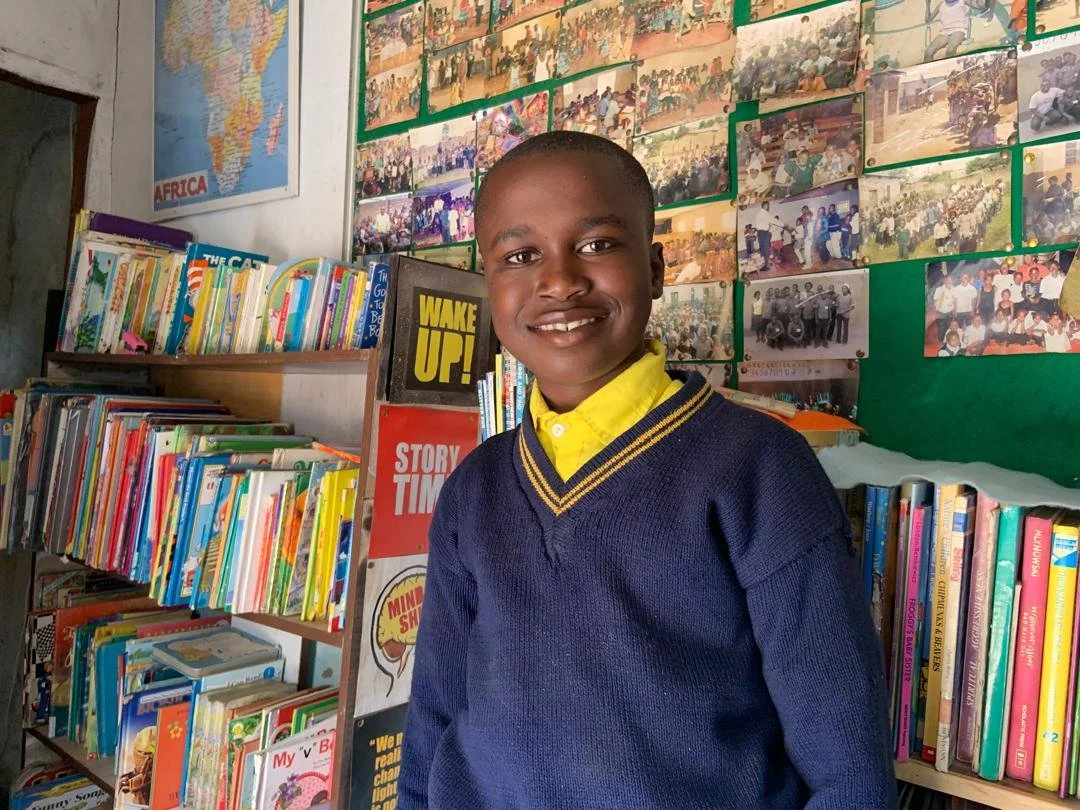
A student poses in the old office library
With encouragement from the Impact One mentoring team, Mathews set up a small bookshelf behind the desk in his office. However, there wasn’t enough space to display all the books or interact with enough children, and he realized his vision hadn’t been fully realized. Using the donor engagement skills he learned at Impact One trainings, he created a short video inviting donors to help transform one of his classrooms by fixing the roof, painting the walls, and adding shelves. When the work was complete, he was finally able to display all the books he had collected over the years on the new shelves. On October 16th, the library was officially opened to both the school and the community.
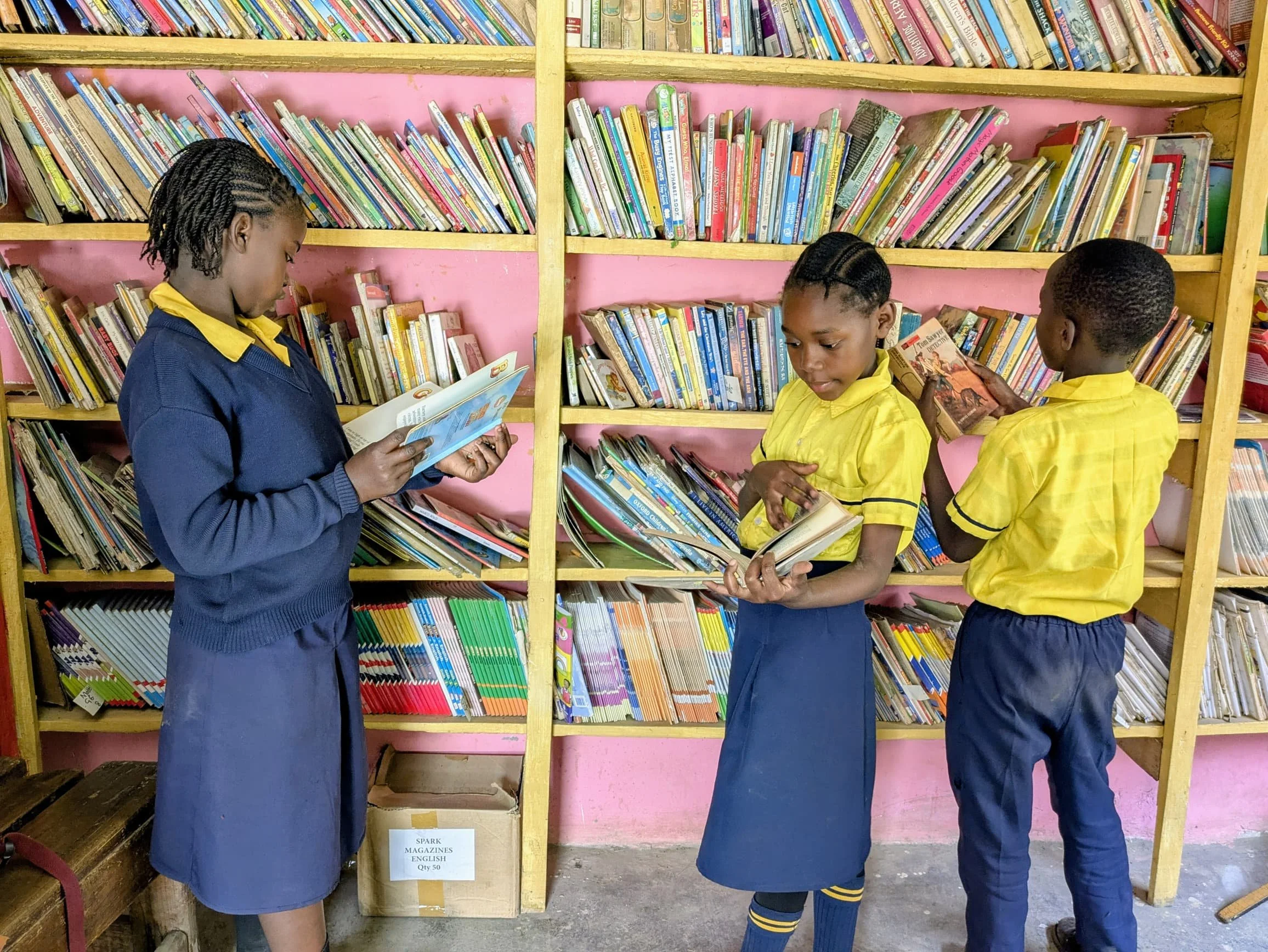
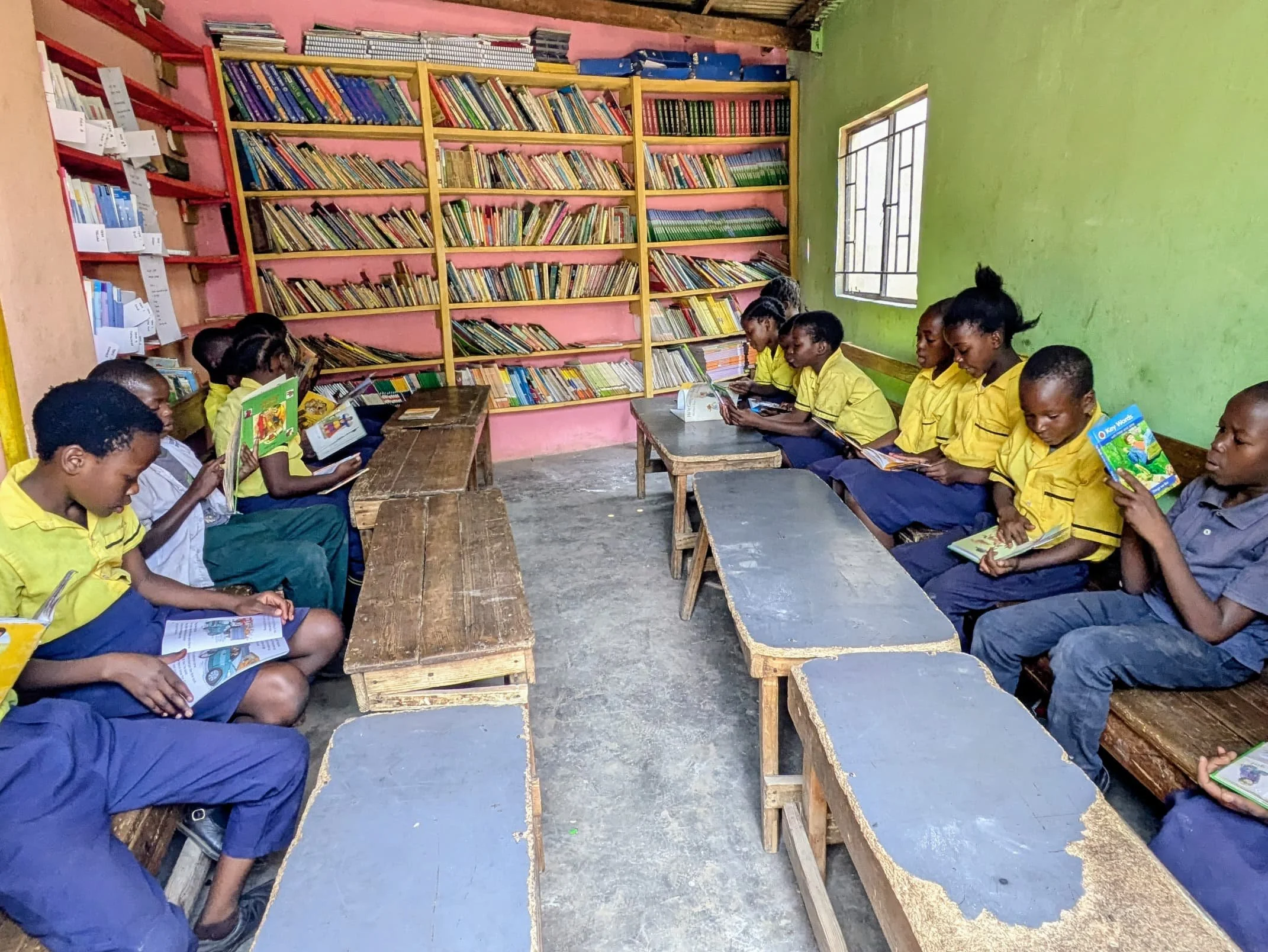
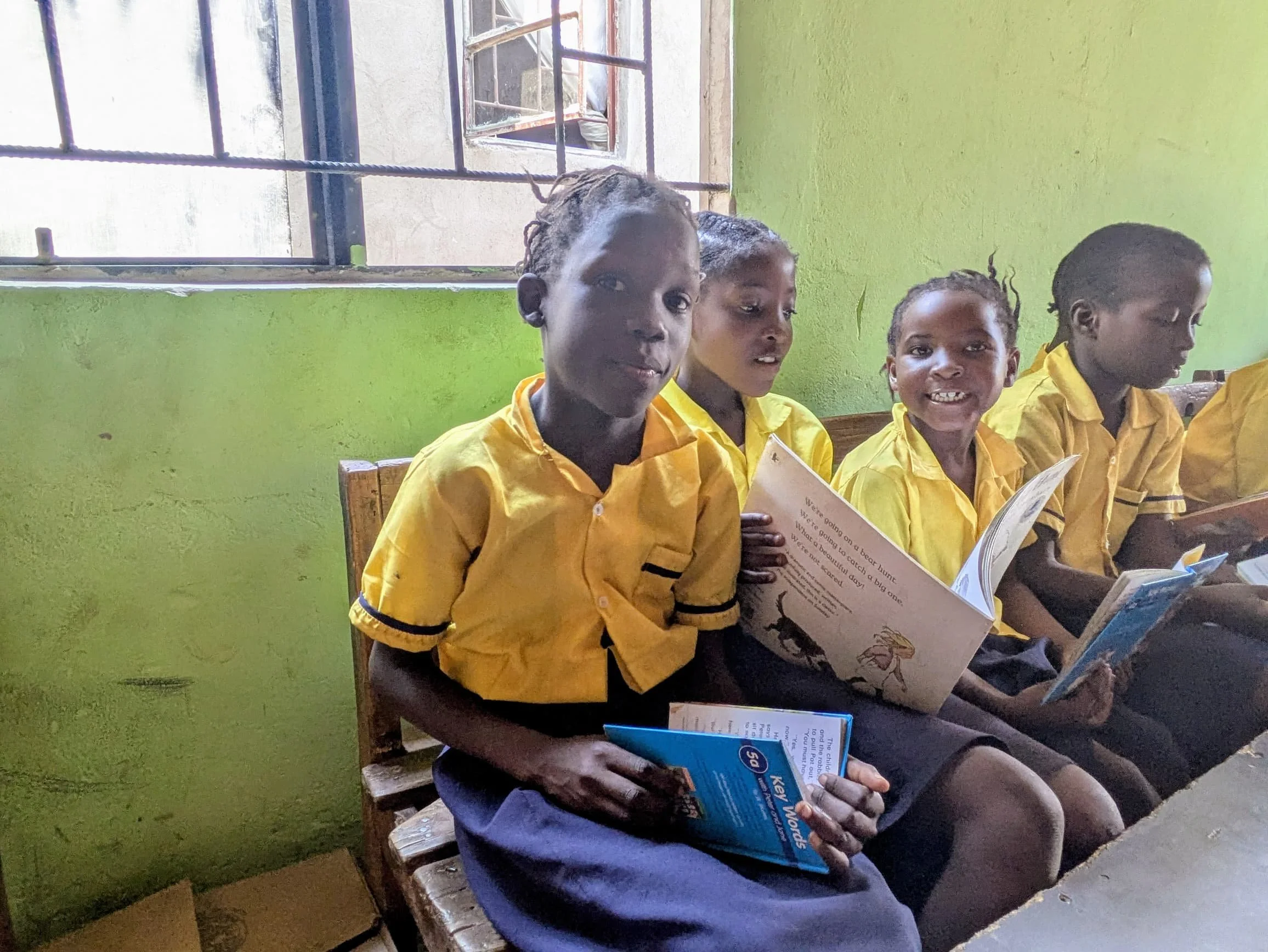
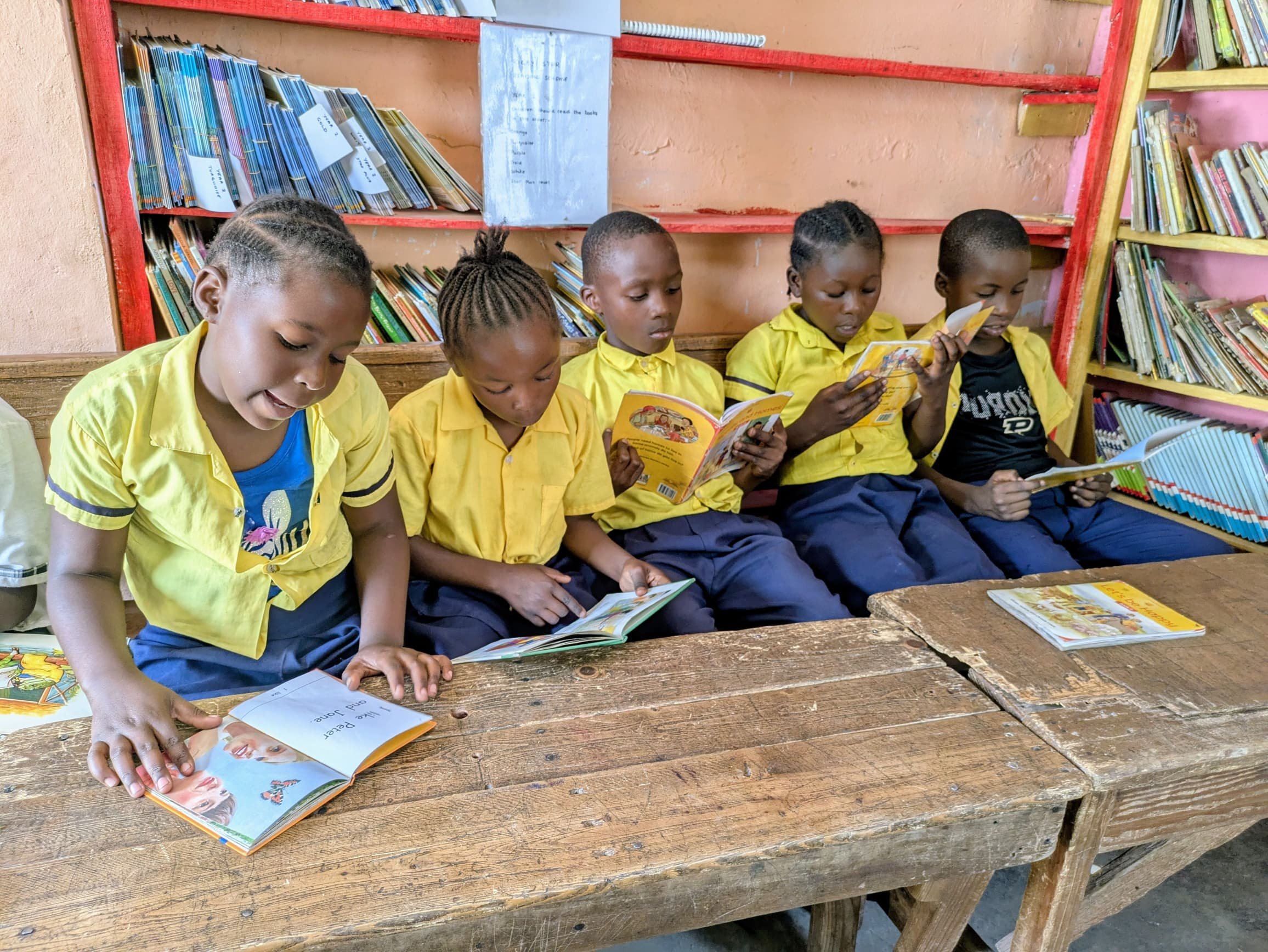
“The excitement from my students was tangible,” he said. “They couldn’t wait to borrow books. That day, I realized how much potential I had been holding back because of fear. Now we have a simple but functional system to lend out books to our students and community. Our children are practicing reading, sharpening their comprehension skills, and improving their fluency. I only wish I had done this sooner.”
The birth of the library at Twin Palm Community School began with the transformation of Mathew’s perspective. He had to recognize the value of reading for fun, the trust he could place in his students to care for the books, and the importance of systems to ensure success. Mathews attributes this transformation to Impact One’s model of mentorship and empowerment. The “I Do. We Do. You Do.” approach encourages educators to learn, collaborate, and then take ownership.
“I saw how Impact One modeled a culture of reading for fun,” he said. “They didn’t just stop at teaching us literacy skills; they showed us that reading can be enjoyable. They lent out books to our schools and to the community at large. This has influenced how I now approach reading in my school and community. I want my students to experience the same excitement I had growing up. To read not because they have to, but because they love to. Impact One has passed the baton to us. It’s now up to us to change the narrative from being a culture that doesn’t read to one that reads for fun. I would encourage other school directors to overcome their fears and take that first step toward opening a library in their schools. It’s worth it.”
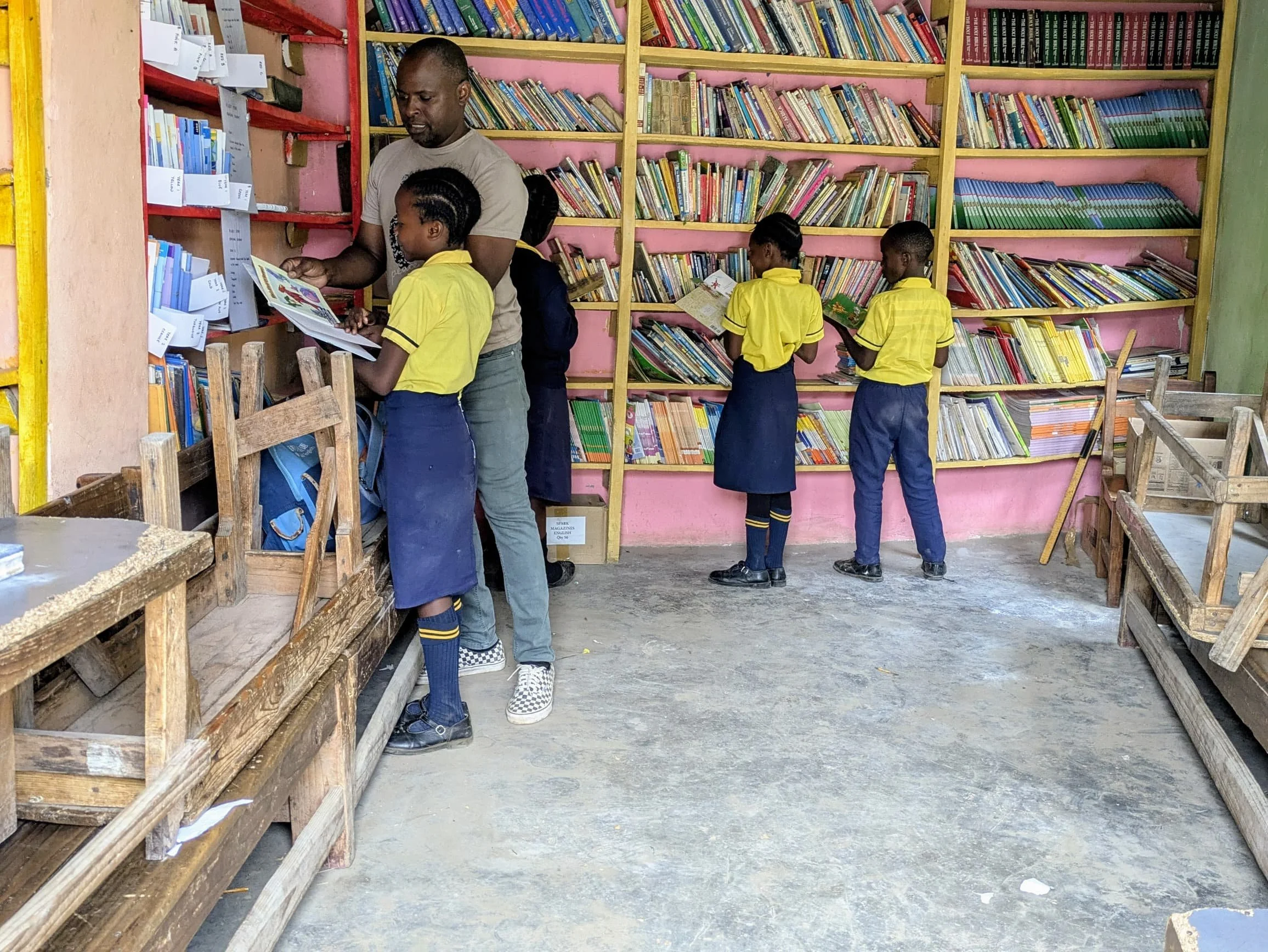
Mathews helps a student choose a book to read
Public libraries and school libraries are a rare sight in Zambia. But by modeling best practices, Impact One is turning the tide. Twin Palm has now become the second school in the Chikondano Network of Schools to open a library, and we’re excited to see more follow!